A smartphone is no longer just a device for making calls and sending messages. For millions of people around the world, it has become a bank, classroom, shopping center, workplace, entertainment system, navigation tool and communication platform.
Behind many of these activities are mobile applications.
Whether someone is ordering food, transferring money, booking transportation, learning a new skill, communicating with customers or managing a business, there is often an app making the process easier.
This has created enormous opportunities for businesses, entrepreneurs and software developers. A well-designed mobile application can turn an idea into a digital product that reaches customers wherever they are.
But building a successful mobile app involves much more than writing code. It requires understanding users, solving a real problem, designing a good experience, testing carefully and maintaining the application after launch.
What Is Mobile App Development?
Mobile app development is the process of designing, building, testing and maintaining software applications for mobile devices such as smartphones and tablets.
Mobile applications are generally developed for operating systems such as Android and iOS.
An app can be very simple, such as a calculator or note-taking application, or extremely complex, such as a banking, social media, e-commerce or transportation platform.
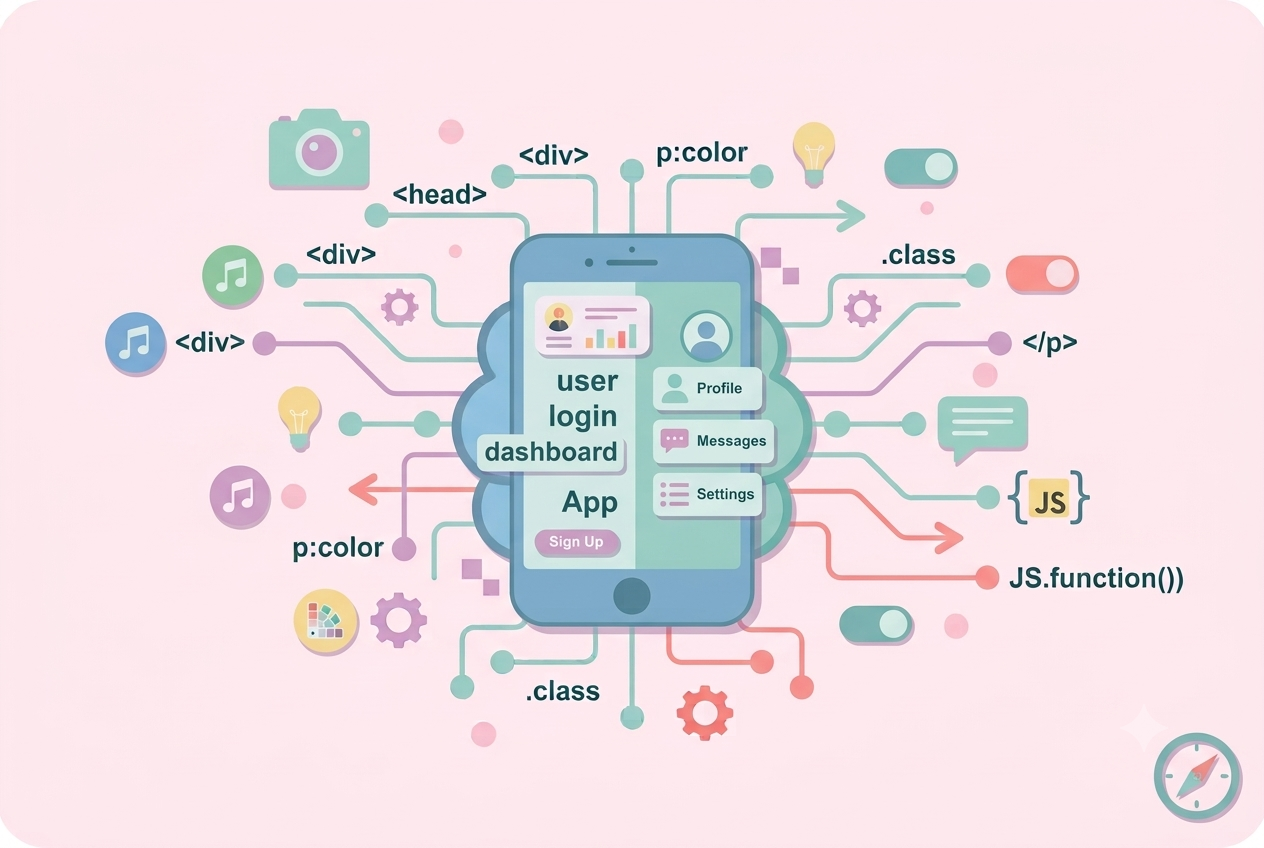
A modern application may include:
User registration
Login and authentication
Online payments
Messaging
Push notifications
Maps and location services
Image and video uploads
Databases
Search
Artificial intelligence
Cloud services
Customer support
Administrative dashboards
The complexity depends on what the application is designed to accomplish.
Why Mobile Apps Matter to Businesses
Businesses have traditionally relied on physical stores, telephone calls, websites and social media to reach customers.
Mobile applications provide another channel.
An app can give customers direct access to a company's services from their phones.
For example, a restaurant could create an app where customers can:
1. View the menu.
2. Select meals.
3. Place an order.
4. Pay online.
5. Track delivery.
6. Receive notifications.
Instead of depending entirely on customers visiting a physical location, the business creates a digital channel that can remain available around the clock.
This can be particularly useful for businesses that have frequent customer interactions.
Mobile Apps Are More Than Digital Versions of Websites
A common mistake is assuming that a mobile application is simply a website placed inside a phone.
Although websites and mobile apps can provide similar information, apps can take advantage of mobile device capabilities.
For example, an application can potentially use:
Camera
GPS
Microphone
Contacts
Notifications
Bluetooth
Biometric authentication
Device storage
This creates opportunities for experiences that may not be possible through a traditional website alone.
A delivery application, for example, can use location services to help determine where an order should be delivered.
A fitness application can use device sensors to help track activity.
A financial application can use biometric authentication supported by the device.
The possibilities depend on the operating system, permissions and application design.
Native App Development
One approach to mobile development is building applications specifically for a particular operating system.
For Android, developers commonly work with technologies such as Kotlin and Java.
For Apple's platforms, Swift is widely used.
Native development can provide strong access to platform-specific features and can be appropriate when performance or deep integration with the operating system is especially important.
However, building separate applications for Android and iOS can require additional development resources.
That is one reason cross-platform development has become popular.
Cross-Platform Mobile Development
Cross-platform development allows developers to build applications that can run on multiple platforms from a shared codebase.
Frameworks such as Flutter and React Native are examples of technologies used for this purpose.
The major attraction is efficiency.
Instead of maintaining completely separate projects for Android and iOS, a development team may be able to share a significant portion of its code.
This does not mean that every part of the application will automatically work identically everywhere. Developers still need to test applications on different devices and handle platform-specific requirements.
Nevertheless, cross-platform development can be an effective approach for many businesses.
The Importance of Good App Design
A technically functional application can still fail if users find it confusing.
This is where user experience becomes important.
When someone opens an application for the first time, they should be able to understand what to do without unnecessary difficulty.
Good mobile design generally focuses on:
Simple navigation
Clear buttons
Readable text
Logical screens
Fast interactions
Consistent layouts
Useful error messages
Accessible controls
For example, if an application is designed for customers to make a payment, the payment process should not require users to navigate through unnecessary screens.
The easier an important task is to complete, the better the overall experience can be.
Start With a Problem, Not an App
One of the most important principles in mobile development is to start with a problem.
Many people begin with:
> “I want to build an app.”
A better question is:
> “What problem will this app solve?”
This difference can determine whether the project has a meaningful purpose.
Suppose people in a particular community struggle to find reliable service providers.
Instead of simply building a generic application, an entrepreneur could investigate the problem and create a platform that helps users discover, contact and potentially book verified providers.
The technology becomes a tool for solving the problem.
This approach can also make development more focused because developers know what the application is actually supposed to accomplish.
Understanding the Target User
An app should be designed around the people who will use it.
A banking application, for example, has different requirements from a children's educational app.
Before development begins, it is useful to understand:
Who are the users?
What devices do they use?
What problem are they trying to solve?
What level of technical knowledge do they have?
What features do they actually need?
What could make them stop using the application?
These questions help developers and business owners make better decisions.
The Minimum Viable Product
Businesses sometimes attempt to build too many features into their first version.
This can increase development time, cost and complexity.
A better approach can be to create a Minimum Viable Product, commonly called an MVP.
An MVP contains the essential features required to solve the core problem.
For example, imagine an entrepreneur wants to build a large marketplace.
The long-term vision might include:
Seller accounts
Buyer accounts
Product listings
Payments
Reviews
Messaging
Delivery
Advertising
Analytics
Promotions
Loyalty programs
Instead of building everything immediately, the first version might focus on registration, listings, search and basic transactions.
Once users begin interacting with the platform, the company can learn what works and what needs improvement.
Backend Systems Power Many Mobile Apps
The application installed on a smartphone is often only one part of a much larger system.
Behind the app may be a backend containing servers, databases and APIs.
For example:
Mobile App → API → Server → Database
When a user logs in, the app may send information to the backend.
The server processes the request and communicates with the database.
The response is then returned to the application.
This architecture allows information to be stored centrally and synchronized between users and devices.
A social networking application, for example, needs backend systems to store accounts, posts, messages, relationships and other information.
APIs and Mobile Applications
API stands for Application Programming Interface.
APIs allow different software systems to communicate with one another.
A mobile application might use an API to communicate with:
A payment provider
A map service
A cloud database
A messaging service
An authentication system
A business's internal software
For example, when a user purchases something through an application, the app may communicate with a payment API to initiate or verify the transaction.
APIs are one of the foundations of modern software development because they allow different systems to work together.
Mobile App Security
Security should be considered from the beginning of development rather than added at the end.
Mobile applications can handle highly sensitive information, including personal details, financial information, passwords and private communications.
Developers should therefore consider:
Secure authentication
Encryption
Safe API communication
Appropriate permission handling
Secure storage
Input validation
Session management
Protection against common attacks
Regular updates
Developers should also avoid storing sensitive information unnecessarily.
The principle should be simple: collect and retain information only when it is required for a legitimate function.
Testing Is a Major Part of Development
An application that works perfectly on one phone can behave differently on another.
Different devices may have:
Different screen sizes
Different operating system versions
Different hardware
Different performance levels
Different network conditions
Testing should therefore happen across appropriate devices and environments.
Developers should test important functions such as:
Registration
Login
Navigation
Payments
Notifications
Forms
Image uploads
Offline behavior
Error handling
Testing should also include situations where something goes wrong.
What happens if the internet disappears during payment?
What happens if a user enters an incorrect password?
What happens if the server is temporarily unavailable?
Good software should handle these situations gracefully.
App Performance Matters
Users generally expect mobile applications to respond quickly.
Slow applications can frustrate users and may cause them to stop using a product.
Performance can be affected by:
Large images
Poorly optimized code
Excessive network requests
Inefficient databases
Unnecessary background processes
Poor server configuration
Developers need to consider performance throughout the development process.
A visually impressive application is not enough if basic actions take too long.
Publishing an App
Once development and testing are complete, the application can be prepared for distribution.
Android applications can be distributed through platforms such as Google Play.
Apple applications are distributed through Apple's App Store.
Publishing requires more than uploading an application file.
Developers may need to prepare:
Application name
App icon
Screenshots
Description
Privacy information
Age/content information
Developer information
Release configuration
The application also needs to comply with the relevant platform's requirements.
App Maintenance Does Not End After Launch
Launching an app is not the end of development.
It is the beginning of another stage.
After release, developers may discover:
Bugs
Security issues
Compatibility problems
User experience problems
Performance issues
Operating systems also change.
New Android and iOS versions are released, devices evolve and third-party services change their APIs.
Applications therefore need ongoing maintenance.
Businesses should plan for updates instead of treating the first release as a permanent final product.
How Mobile Apps Can Generate Revenue
There are several ways businesses can monetize applications.
These include:
Direct Sales
Users pay to download or access the application.
Subscriptions
Users pay regularly for access to premium features or services.
Advertising
Businesses can generate revenue by displaying advertisements, depending on the application's audience and business model.
In-App Purchases
Users can purchase digital features, products or services within the application.
Transaction Fees
A marketplace or service platform can charge a fee on transactions.
Business Services
Some apps are free for customers while generating revenue through business clients, partnerships or service fees.
The right model depends on the product and its target audience.
Mobile Apps and Small Businesses
Mobile app development is not limited to banks, telecommunications companies or large technology companies.
A small business can potentially benefit from an app if there is a genuine reason for customers to use one.
For example:
A fitness business could offer workout plans and bookings.
A school could provide learning resources and communication tools.
A delivery company could offer order tracking.
A service marketplace could connect customers with providers.
A retail business could create a mobile shopping experience.
The important question is not whether a business has an app.
The important question is whether the app provides useful value.
The Future of Mobile Applications
Mobile applications are becoming increasingly connected with other technologies.
Artificial intelligence can provide personalized recommendations, automated customer support and intelligent search.
Cloud computing provides scalable backend infrastructure.
Digital payments make mobile transactions easier.
Location technologies enable services based on geographical information.
Wearable devices can provide additional data and interaction possibilities.
As these technologies develop, mobile applications will continue to become more capable.
However, the most successful applications will not necessarily be the ones with the largest number of features.
An application that solves one important problem extremely well can be more valuable than an application overloaded with unnecessary functions.
Learning Mobile App Development
Mobile development is also an increasingly valuable digital skill.
A beginner does not need to understand everything at once.
A practical learning path can begin with:
1. Programming fundamentals.
2. User interface design.
3. Mobile development frameworks.
4. Databases.
5. APIs.
6. Authentication.
7. Testing.
8. App deployment.
9. Security.
10. Real-world projects.
Building small applications is one of the best ways to learn.
A simple calculator can teach interface design and application logic.
A note-taking application can introduce local storage.
A weather application can introduce APIs.
A basic shopping application can introduce databases, authentication and payments.
Each project introduces new concepts.
Conclusion
Mobile applications have become an important part of modern digital life.
They allow businesses to interact directly with customers, provide services, automate processes and create new digital business models.
But successful app development requires more than programming. It requires identifying a real problem, understanding users, designing a clear experience, building reliable technology, protecting information and continuously improving the product.
For entrepreneurs, mobile applications can transform ideas into scalable digital services.
For developers, mobile development provides an opportunity to build products used by people around the world.
And for businesses, the growing use of smartphones means that mobile technology can no longer be ignored simply because a company operates traditionally.
The future of mobile apps will be shaped by businesses and developers who focus not only on technology, but also on usefulness.
Build for people. Solve real problems. Create technology that makes life easier.
By Alvonbot Limited — Technology, Innovation & Digital Solutions

Leave a comment
Your email address will not be published. Required fields are marked *