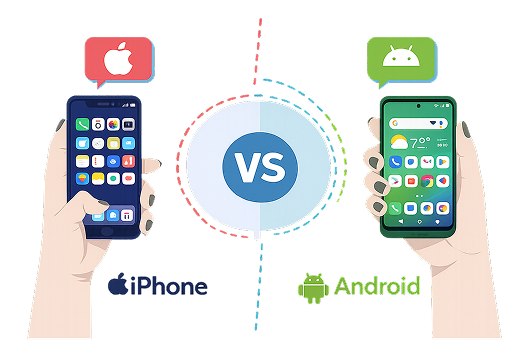
One of the first big decisions you face when building a mobile app is: Should I target Android, iPhone (iOS), or both?
Many beginners waste time or money by choosing the wrong platform for their situation. Others try to support both from day one and burn out. In 2026, the right answer depends on your goals, budget, skills, and audience — not on which platform is “better” overall.
This guide gives you a clear, realistic comparison so you can decide with confidence.
### Quick Overview of the Two Platforms
| Factor | Android | iPhone (iOS) |
|-------------------------|----------------------------------|----------------------------------|
| Global market share | Much larger | Smaller but very strong |
| User spending | Lower average | Higher average |
| Device variety | Thousands of devices | Limited, controlled devices |
| Development cost | Usually lower | Usually higher |
| Publishing difficulty | Easier and cheaper | Stricter and more expensive |
| Update speed | Fragmented | Fast and consistent |
| Best for | Reach & volume | Revenue & premium users |
### 1. Market Share and Reach
Android still dominates global market share, especially in Africa, Asia, Latin America, and many emerging markets. If your goal is maximum number of potential users, Android wins.
iOS has a smaller overall share but is very strong in high-income countries (United States, Canada, UK, Australia, parts of Europe, and Gulf countries). In those markets, iPhone users are often the majority among people who spend money on apps.
**Rule of thumb:**
- Want the biggest possible audience → Start with Android
- Targeting users in wealthy countries who pay for apps → iOS is very attractive
### 2. Revenue Potential
This is where iPhone often wins for independent developers.
iOS users tend to:
- Spend more money on apps
- Be more willing to pay for subscriptions
- Have higher average revenue per user
Many indie developers report that even with fewer downloads, their iOS version makes more money than the Android version.
Android can still generate good revenue, especially with ads or freemium models, but pure paid apps and subscriptions usually perform better on iOS.
### 3. Cost and Difficulty of Publishing
**Android (Google Play):**
- One-time $25 registration fee
- Relatively straightforward review process
- Easier for beginners and no-code tools
- You can publish faster in most cases
**iPhone (App Store):**
- $99 per year Apple Developer Program fee
- Stricter review guidelines
- More requirements (privacy, design, functionality)
- Longer and sometimes more unpredictable review times
- Harder for pure no-code tools (though many now support it)
If you’re just starting and want to publish quickly with minimal cost, Android is clearly easier.
### 4. Device Fragmentation vs Consistency
**Android challenge:**
There are thousands of different Android phones with different screen sizes, hardware power, and OS versions. Your app needs more testing to work well across devices.
**iOS advantage:**
Apple controls both the hardware and software. There are far fewer device models, and most users update their operating system relatively quickly. This makes testing and optimization much simpler.
### 5. Development Options in 2026
You have three main paths:
**A. Native Development**
- Android: Kotlin
- iOS: Swift
- Best performance and platform features
- Highest learning curve and cost if hiring developers
**B. Cross-Platform Frameworks**
- Flutter (very popular in 2026)
- React Native
- You write most of the code once and deploy to both platforms
- Excellent choice if you eventually want both
**C. No-Code / Low-Code Tools**
- Many tools (Adalo, FlutterFlow, Thunkable, Glide, etc.) can export to both Android and iOS
- Fastest way to launch
- Some limitations in performance and advanced features
If you’re using no-code tools, supporting both platforms is often realistic from the start. If you’re learning traditional development, most beginners should pick one platform first.
### Practical Recommendations for 2026
**Choose Android first if:**
- You want the lowest cost and fastest path to publishing
- Your target audience is in developing or emerging markets
- You’re using no-code tools and want simplicity
- Your app relies on volume (lots of users, ads, or free downloads)
- You’re a complete beginner
**Choose iPhone first if:**
- Your target users are in high-income countries
- You plan to make money mainly from paid apps or subscriptions
- You care a lot about design polish and smooth performance
- You’re willing to pay the yearly Apple fee and deal with stricter reviews
- You’re building a premium or professional-looking product
**Build for both if:**
- You already have traction on one platform
- You’re using Flutter, React Native, or a capable no-code tool
- You have the time and resources to maintain two versions
- Your app has strong potential in both markets
### A Smart Strategy Many Beginners Use
1. Build and launch on **Android first** (faster and cheaper)
2. Get real user feedback and improve the app
3. Once the app is stable and showing promise, add the **iOS version**
4. Use a cross-platform tool if possible so you’re not maintaining two completely separate codebases
This approach reduces risk and lets you learn from real users before investing more.
### Final Decision Framework
Ask yourself these questions:
- Who is my main target user and where do they live?
- Am I trying to maximize downloads or maximize revenue?
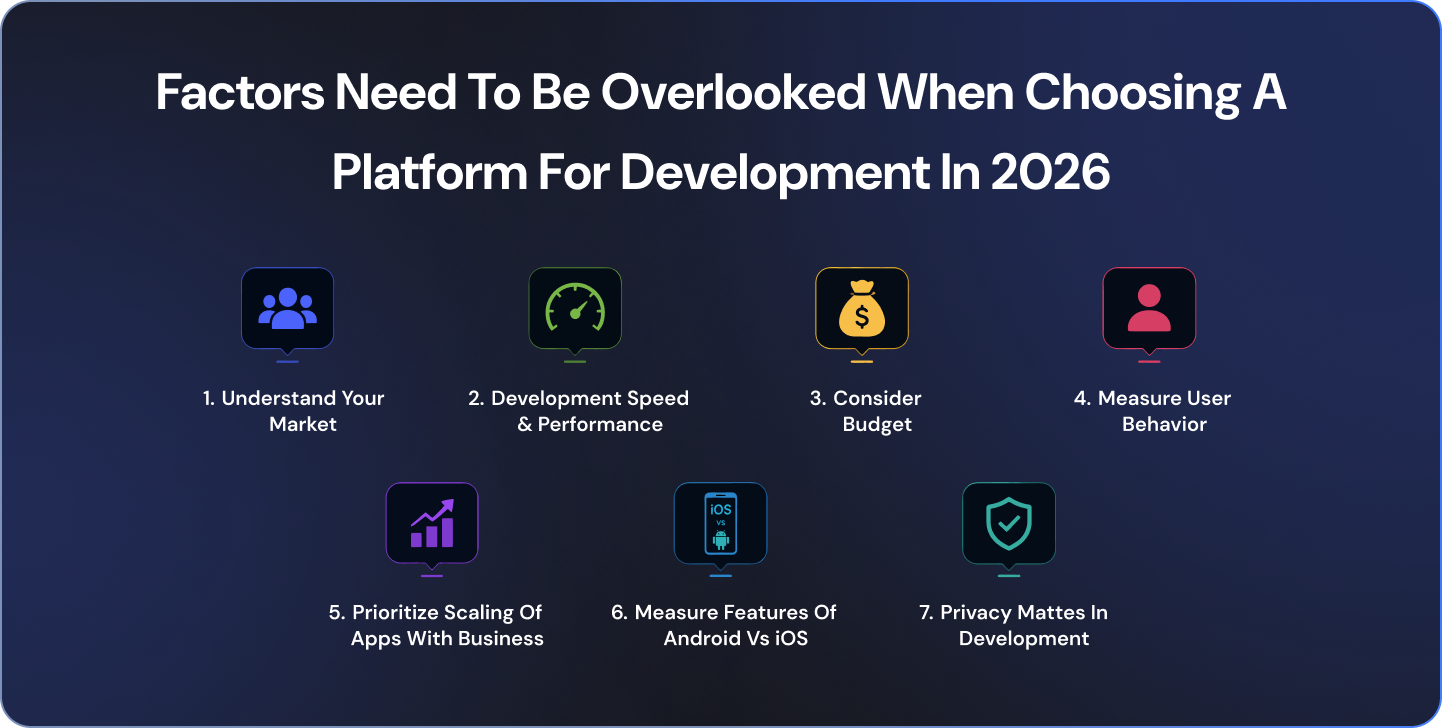
- What is my budget (time and money)?
- Am I using no-code tools or traditional development?
- How important is speed to launch?
Your answers will usually point clearly to one platform.
### Conclusion
There is no universal winner between Android and iPhone. Android gives you reach and easier entry. iPhone often gives you better revenue and a more controlled environment.
In 2026, the best choice is the one that matches your specific goals and resources. Many successful apps started on just one platform and expanded later.
Pick one, launch, learn from real users, and improve. That beats waiting for the “perfect” decision.

Leave a comment
Your email address will not be published. Required fields are marked *