**How AI Is Actually Discovering New Science — Not Just Summarizing Papers**
For years, the most common image of AI in science was a helpful research assistant: summarizing papers, suggesting related work, or polishing prose. That role still exists and remains valuable. But in 2025–2026 a deeper capability has emerged. Advanced AI systems are now participating directly in the process of discovery — generating novel hypotheses, designing experiments, solving open mathematical problems, and producing results that human experts have verified as new contributions.
This is one of the most significant shifts in how knowledge is created.
### From Literature Helper to Research Partner
Early large language models were strong at retrieval and synthesis. They could find relevant papers and rephrase existing knowledge. What changed is the combination of stronger reasoning, tool use, code execution, long-context memory, and multi-agent orchestration. Modern systems can now:
- Explore large combinatorial spaces that are difficult for humans to search exhaustively
- Propose mechanisms or constructions and then test them through code or formal verification
- Iterate on ideas across many steps while maintaining consistency
- Collaborate with human scientists in closed loops of proposal → evaluation → refinement
Google’s work on Gemini for Science, Empirical Research Assistance (ERA), and Co-Scientist illustrates the pattern. These systems help scientists write expert-level empirical software, generate and test hypotheses, and tackle open problems. Similar capabilities appear in other frontier models used for mathematical and scientific research.
### Concrete Advances
Recent examples (publicly reported in 2025–2026) include:
- AI systems contributing to the resolution or significant advancement of long-standing open problems in mathematics and theoretical computer science, sometimes producing formal proofs or constructions that experts have validated.
- Generative models designing novel functional proteins and even complete bacteriophage genomes that were later shown to work in the lab.
- Models proposing mechanistic explanations for puzzling experimental data in immunology and correctly predicting outcomes of held-out experiments.
- Assistance in areas such as network optimization, economic theory (auctions), and certain physics singularities.
In software and machine-learning research itself, AI now routinely helps debug optimization anomalies, improve training techniques, and generate high-quality experimental code. Some research groups report that AI-generated suggestions are becoming a regular part of the ideation and verification pipeline.
### Why This Is Possible Now
Several technical factors converged:
1. **Stronger reasoning and planning** — Models can maintain multi-step chains of thought, explore alternative hypotheses, and backtrack when an approach fails.
2. **Code execution and tool use** — The system can write, run, and debug code that tests its own ideas (numerical experiments, formal verification in systems such as Lean, simulations).
3. **Long context and memory** — It can hold large amounts of background knowledge, prior experimental results, and evolving project state.
4. **Multi-agent setups** — Specialized agents can critique, verify, or expand on each other’s outputs, reducing single-model error rates.
5. **Human-AI collaboration loops** — The most successful results come when AI proposes and humans (or formal checkers) evaluate, rather than fully unsupervised generation.
### What This Does Not Mean
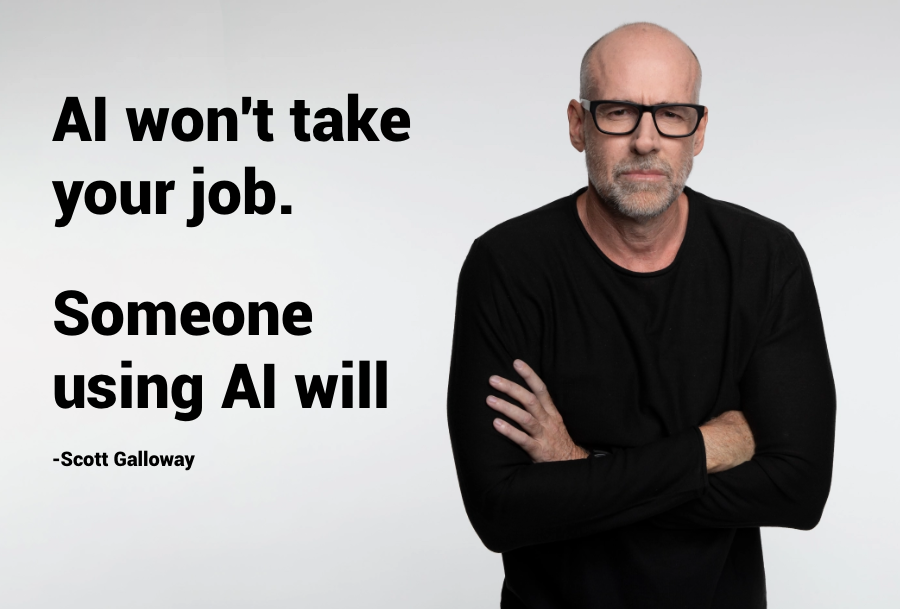
AI is not replacing scientists. The most impressive results still involve close human partnership: choosing important problems, interpreting results in broader context, designing physical experiments, and applying scientific judgment. Current systems remain “jagged” — extremely capable in some domains and still limited in others that require deep physical intuition, ethical judgment, or highly novel conceptual leaps.
Hallucinations and overconfidence have not disappeared. Rigorous verification (formal proofs, independent experimental replication, expert review) remains essential.
### Practical Implications for Researchers
- Treat capable models as junior collaborators that can generate many candidate ideas quickly.
- Give them tools (code interpreters, literature search, formal provers) and clear evaluation criteria.
- Use structured workflows: hypothesis generation → computational testing → human review → refinement.
- Focus AI effort on the parts of the research process that are search-heavy or combinatorially large.
- Maintain strong verification practices; do not outsource scientific responsibility.
### Looking Forward
The trajectory suggests AI will become a standard part of the scientific method in many fields — accelerating literature synthesis, hypothesis generation, experimental design, and analysis. Fields with strong computational or formal components (mathematics, theoretical computer science, certain areas of biology, materials science, and physics) are seeing the earliest impact. Experimental and clinical domains will follow as multimodal and embodied capabilities improve and as laboratory automation matures.
The deeper change is cultural as well as technical. Science has always advanced through tools that extend human cognition — from the telescope to statistical software. Agentic AI is the latest and most general of those tools. The researchers who learn to direct it effectively will explore larger idea spaces, test more possibilities, and potentially reach results that would have taken far longer by traditional means alone.
The question is no longer whether AI can help with science. It is how we design the collaboration so that the combination of human judgment and machine search produces reliable new knowledge faster than either could alone.

Leave a comment
Your email address will not be published. Required fields are marked *