Almost everyone who's tried to be consistent on social media has the same story: enthusiastic start, elaborate content calendar mapped out for the next three months, and then total abandonment somewhere around week two when life gets busy and the whole system collapses. This isn't a discipline problem — it's usually a design problem. Most content calendars fail because they're built for an idealized version of your time and energy, not the actual version.
Here's how to build one that survives contact with a real, busy life.
**Start with your actual capacity, not your ambition**
The single biggest reason content calendars collapse is that they're built around how much content you'd like to post in a perfect world, rather than how much you can realistically sustain during a normal, imperfect week. If you're consistently posting three times a week and considering scaling up to daily, ask honestly whether you have the actual time and energy for that increase, or whether you're extrapolating from a few unusually productive days. A calendar built around two solid, sustainable weekly posts that actually happen beats one built around five ambitious posts that quietly stops happening after the first month.
**Batch content creation instead of creating daily**
Trying to come up with, write, and design a new post every single day is mentally exhausting and leaves you constantly starting from zero. A far more sustainable approach is setting aside one dedicated block of time — a few hours weekly, or even one longer session monthly — to create multiple pieces of content at once, while you're already in a creative headspace. This front-loads the mental effort into fewer, more focused sessions rather than spreading it thin across every single day, which tends to be where consistency actually breaks down.
**Build in themed content buckets, not blank-page brainstorming**
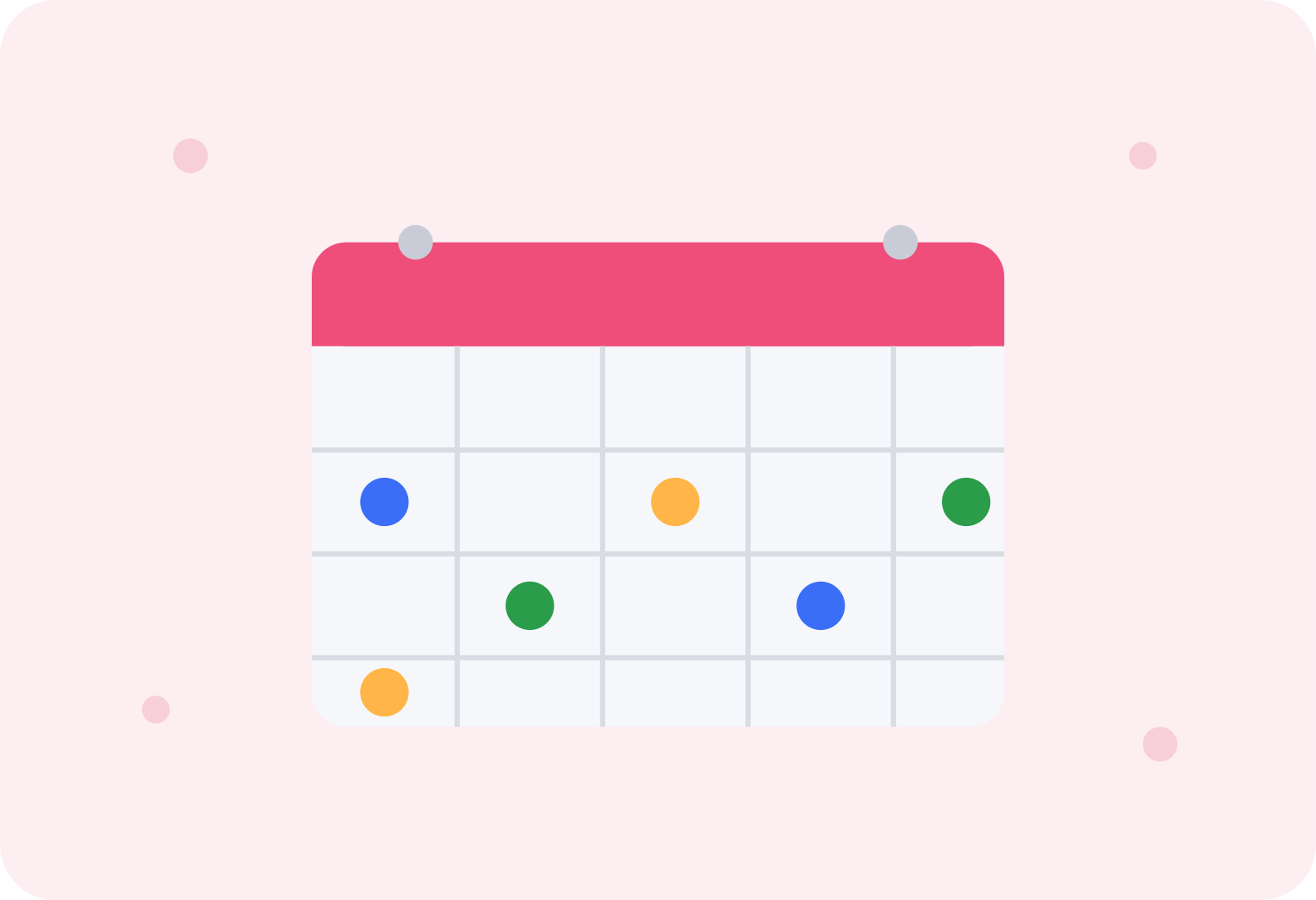
Staring at an empty calendar slot and trying to think of something to post from scratch is one of the most common points of failure. Instead, create a small set of recurring content themes or categories that rotate — maybe a tip Monday, a behind-the-scenes Wednesday, and a customer spotlight Friday. Having a category assigned to each slot removes the blank-page problem entirely; you're not asking "what should I post today," you're asking the much easier question of “what fits into today's specific theme.”
**Leave deliberate flexibility built into the structure**
A calendar that requires perfect execution every single week is fragile by design. Building in intentional flexibility — a couple of "flex" slots each month with no fixed topic, or a rule that any missed post simply gets skipped rather than needing to be made up — prevents one bad week from derailing the entire system. Rigid calendars tend to produce all-or-nothing thinking: miss one post, feel like you've failed, and abandon the whole plan. Flexible calendars absorb the occasional miss without triggering that collapse.
**Repurpose content across platforms instead of creating from scratch for each one**
One piece of content — a tip, a behind-the-scenes clip, a customer testimonial — can usually be reshaped into two or three different formats across different platforms with fairly minor adjustments, rather than requiring entirely separate content for each one. A longer video can become a short clip for one platform and a text-based post with a still image for another. This dramatically reduces the actual creation workload without reducing your presence across platforms.
**Track what actually performs, and let that shape future planning**
Rather than planning three months of content purely from imagination, review what's genuinely resonated over the past month — which posts got saved, shared, or generated real engagement — and let that inform what you plan next. This turns your calendar into something that evolves based on real feedback rather than staying static regardless of what's actually working.
**Use a simple tool, not an elaborate system**
The complexity of your planning tool should match the complexity you can actually maintain. A basic spreadsheet or a simple note with dates and topics is often more sustainable long-term than an elaborate project management system with dozens of fields, simply because the elaborate system itself becomes another task to maintain. If setting up and updating your planning tool starts to feel like its own chore, it's worth simplifying rather than adding structure.
**Revisit and adjust monthly, rather than assuming it'll stay static**
A content calendar that worked well in one season of your business or life might not fit as circumstances change. Building in a brief monthly check-in — even just ten minutes — to honestly assess whether the current rhythm is sustainable, and adjusting frequency or themes accordingly, keeps the system responsive rather than letting it quietly become a source of guilt when life inevitably shifts.
**The bottom line**
Content calendars don't fail because people lack discipline — they fail because they're designed around an unrealistic version of available time and energy. Building one around your actual, sustainable capacity, with built-in flexibility for the inevitable bad weeks, produces far more consistent long-term output than an ambitious plan that collapses the first time something goes wrong.

Leave a comment
Your email address will not be published. Required fields are marked *