
What Is Artificial Intelligence? A Simple Guide for Beginners
Artificial intelligence, usually called AI, has gone from something that sounded like science fiction to something many of us use every day.
You may have used an AI chatbot to answer a question, asked your phone to recognize your face, watched a video recommended by an algorithm, or used an app that automatically improves your photos. You might not have even realized that AI was involved.
But what exactly is artificial intelligence?
In simple terms, AI is technology that allows computers and software to perform tasks that normally require some form of human intelligence. These tasks can include understanding language, recognizing images, finding patterns, making predictions, solving problems, and generating content.
You don't need to be a programmer to understand AI. In fact, having a basic understanding of it is becoming increasingly useful because AI is changing the way people study, work, communicate, create content, and run businesses.
How Does Artificial Intelligence Work?
At its core, AI works by using computers to process information and identify patterns.
Imagine showing a computer thousands of pictures of cats and dogs. With the right type of AI system, the computer can analyze those examples and learn patterns that help it distinguish between the two.
This is different from simply programming a computer with a long list of instructions such as:
«“If the animal has this feature, call it a cat.”»
Instead, modern AI systems can learn patterns from large amounts of data.
This process is commonly associated with machine learning, a branch of AI in which computer systems learn from data and improve their performance on particular tasks.
The more sophisticated the system and the better the training data, the more complicated tasks it can potentially handle.
What Is Machine Learning?
Machine learning is one of the most important concepts behind modern AI.
Rather than manually programming every possible situation, developers can train a machine-learning model using examples.
For instance, an email service can analyze large numbers of messages and learn patterns associated with spam. When a new message arrives, the system can use what it has learned to estimate whether that message is likely to be unwanted.
Machine learning is used in many areas, including:
- Spam detection
- Fraud detection
- Product recommendations
- Image recognition
- Voice recognition
- Search engines
- Predictive systems
- Personalized advertising
Machine learning is only one part of the wider AI field, but it has become particularly important in recent years.
What Is Generative AI?
You have probably heard the term generative AI frequently.
Generative AI refers to AI systems that can create new content based on patterns learned from existing data.
Depending on the system, that content can include:
- Text
- Images
- Audio
- Video
- Computer code
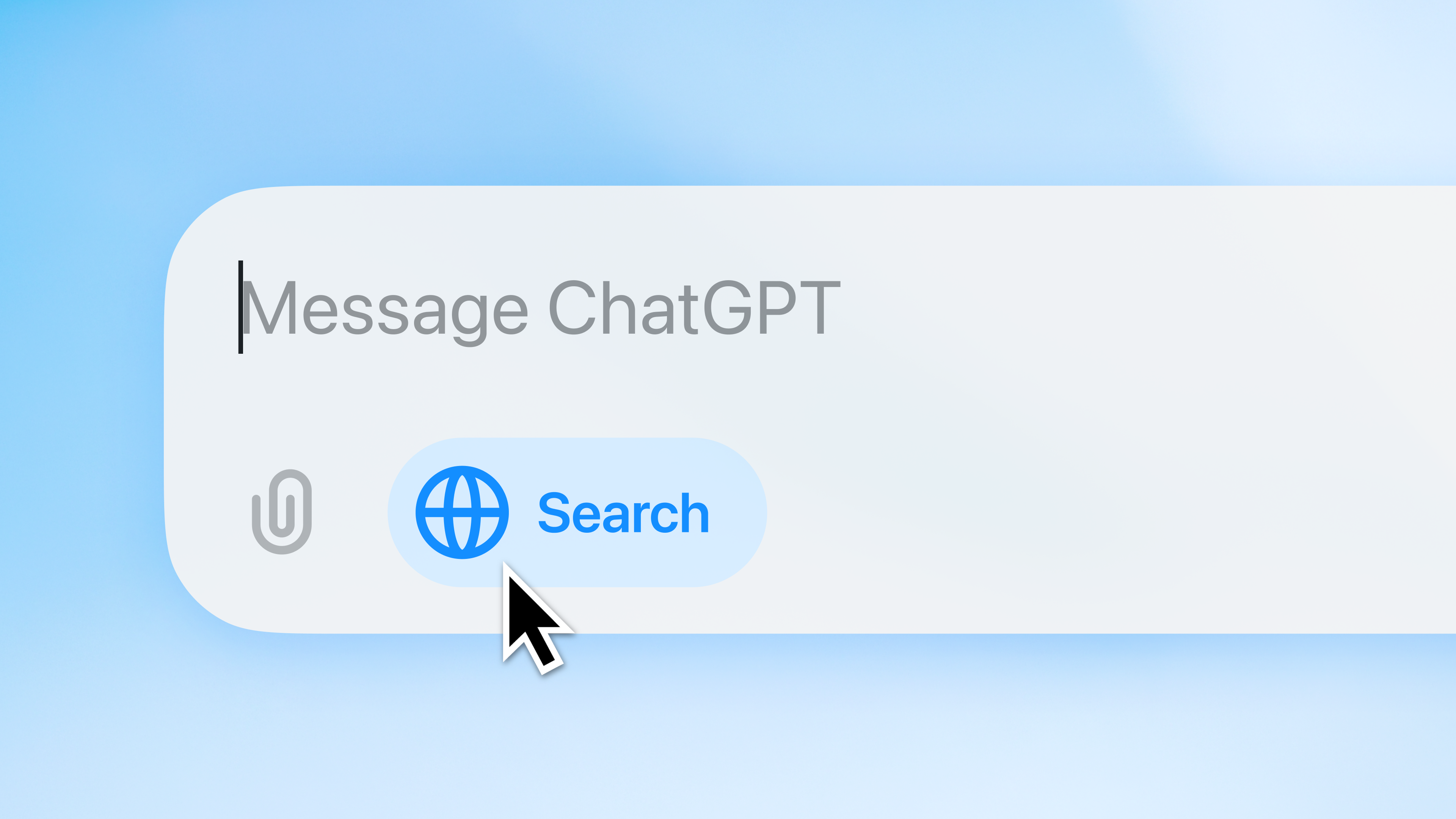
AI chatbots are one of the most visible examples. A user can provide a prompt such as:
«“Explain photosynthesis to a 12-year-old.”»
The system can then generate a response based on patterns learned during its training.
Image-generation systems work in a similar broad sense, except their output is visual rather than primarily text-based.
Generative AI has become particularly popular because it allows ordinary users to interact with sophisticated technology using natural language rather than complicated commands.
What Can AI Actually Do?
AI is already being used in more places than many people realize.
1. Smartphones
Modern smartphones use AI for features such as facial recognition, photography improvements, voice recognition, translation, and personalized suggestions.
Your phone's camera, for example, may automatically identify a scene and adjust settings to produce a better photograph.
2. Social Media
Social media platforms use algorithms to decide which posts, videos, and advertisements are more likely to interest you.
This is why two people can open the same social media platform and see completely different content.
3. Online Shopping
E-commerce platforms can analyze browsing and purchasing behavior to recommend products that may be relevant to individual users.
The familiar “you may also like” section is one example of this type of personalization.
4. Healthcare
AI is increasingly being researched and used for tasks such as analyzing medical images, identifying patterns in health data, supporting research, and assisting healthcare professionals.
However, AI should not automatically be treated as a replacement for qualified medical professionals.
5. Business
Businesses use AI for customer service, data analysis, marketing, automation, fraud detection, forecasting, and other tasks.
A small business owner can also use AI tools to brainstorm marketing ideas, summarize documents, organize information, or create a first draft of content.
6. Education
Students and teachers can use AI for explanations, brainstorming, language practice, research assistance, and other educational tasks.
However, students should understand the difference between using AI as a learning tool and allowing AI to do all of their thinking for them.
Is AI the Same as a Human Brain?
No.
AI can produce surprisingly impressive results, but it does not mean that a computer has become a human being.
AI systems process information using mathematical models and computational techniques. They can recognize patterns and generate responses, but that should not automatically be interpreted as human understanding, emotions, consciousness, or common sense.
This distinction is important.
An AI system can sometimes provide an impressive answer and then confidently produce something completely incorrect.
That's one reason why important information should be verified rather than blindly trusted.
Can AI Make Mistakes?
Absolutely.
One of the biggest mistakes beginners make is assuming that because an AI response sounds confident, it must be correct.
AI systems can generate incorrect information, misunderstand questions, invent details, or rely on outdated information depending on the system and the task.
For example, you might ask an AI tool about a software feature that was recently changed. The system could provide an answer that sounds perfectly reasonable but no longer matches the current version.
For important decisions, it is therefore better to use AI as an assistant rather than an unquestionable authority.
Check important facts against reliable sources, especially when the information concerns money, health, law, security, or other high-stakes subjects.
Will AI Take People's Jobs?
This is one of the biggest questions surrounding AI.
The honest answer is complicated.
AI can automate certain tasks, which means some jobs may change significantly. At the same time, new roles and opportunities can emerge around AI, software, data, content, cybersecurity, and other technologies.
In many workplaces, the more immediate change may not be that an entire job disappears overnight. Instead, individual tasks within that job may become automated.
For workers, this makes learning digital skills increasingly valuable.
Someone who knows how to use technology effectively can potentially become more productive than someone who refuses to adapt.
Should You Learn About AI?
Yes—even if you have no intention of becoming an AI engineer.
You don't necessarily need to learn advanced mathematics or programming.
Start by understanding:
- What AI is
- What AI can and cannot do
- How to write useful prompts
- How to verify AI-generated information
- How AI tools can improve your work
- How to protect your personal information when using AI
These basic skills can be useful for students, employees, entrepreneurs, freelancers, content creators, and business owners.
The Future of AI
AI is still developing rapidly.
New models, applications, and products continue to appear, and businesses are finding new ways to incorporate AI into their operations.
It is difficult to predict exactly what AI will look like several years from now. But one thing is already clear: understanding AI is becoming an important part of digital literacy.
You don't need to become an AI expert overnight.
Start with the basics, experiment with useful tools, question the information you receive, and gradually learn how the technology works.
The goal isn't simply to use AI because everyone else is using it.
The goal is to understand when it is useful, when it isn't, and how to use it responsibly.
Final Thoughts
Artificial intelligence can seem complicated when you first encounter terms such as machine learning, neural networks, large language models, and generative AI.
But the basic idea is much easier to understand.
AI is a collection of technologies that enables computers to perform tasks involving capabilities we traditionally associate with human intelligence, such as recognizing patterns, understanding language, making predictions, and generating content.
You are already likely interacting with AI in some form.
The next step isn't to be afraid of it or blindly trust it.
Learn how it works. Learn what it can do. Understand its limitations. Then use it as a tool to make your own skills more powerful.
This article is part of Alvonbot.com's Technology and AI series.

Leave a comment
Your email address will not be published. Required fields are marked *