What Is Generative AI? How It Works and Why It Matters
Artificial intelligence has been around for much longer than the recent wave of AI chatbots and image generators.
What has changed is how easily ordinary people can interact with AI.
You can now ask a computer to write an article, create an image, summarize information, generate computer code, or help brainstorm an idea using a simple instruction.
This type of technology is generally known as generative AI.
But what does “generative” actually mean, and how is it different from the AI systems that existed before?
What Is Generative AI?
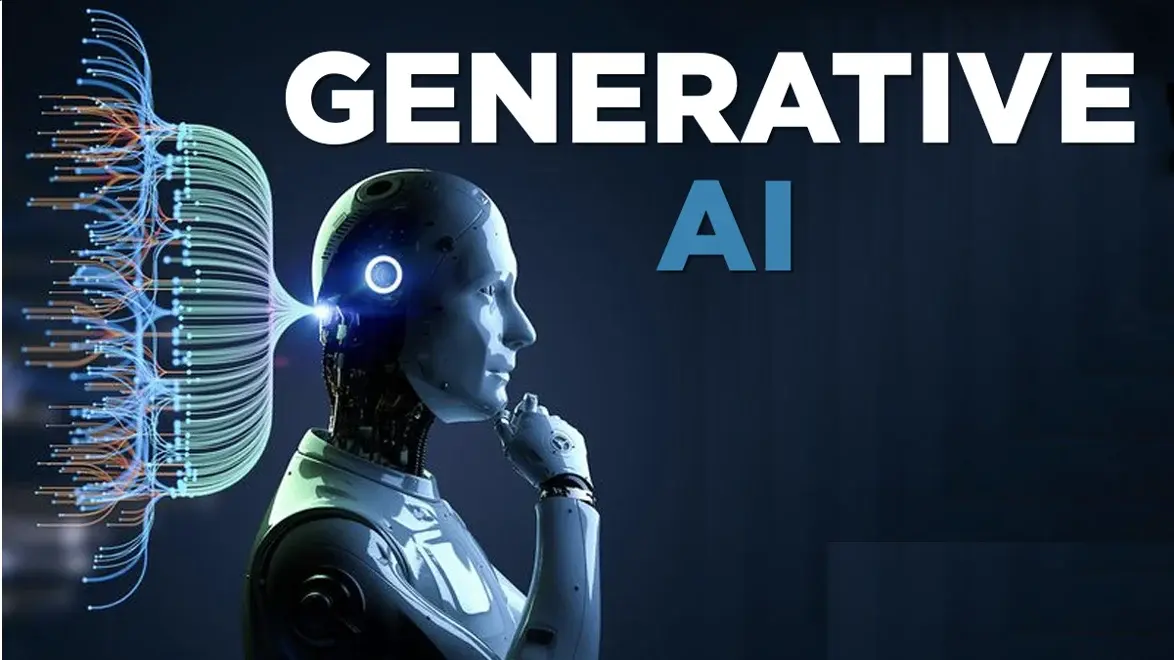
Generative AI refers to artificial intelligence systems that can create new content based on patterns learned from data.
The content can take different forms, including:
- Text
- Images
- Audio
- Video
- Computer code
- Other digital content
For example, a traditional AI system might be designed to determine whether an image contains a particular object.
A generative AI system can potentially create an entirely new image based on a user's description.
Similarly, instead of simply identifying text, a generative AI model can produce new text in response to a prompt.
That's where the word generative comes from: the system generates an output.
How Does Generative AI Work?
The technology behind generative AI can be complicated, but the basic concept is easier to understand.
Generative AI models are trained using large amounts of data.
During training, the model learns patterns and relationships within that data.
For a language model, this involves learning patterns in language.
For an image-generation system, the model can learn patterns associated with visual information.
Once trained, the model can use what it has learned to generate new outputs in response to instructions.
It's important to understand that this doesn't mean the AI simply stores a giant collection of finished answers and retrieves one whenever you ask a question.
The process is considerably more complex.
What Are AI Models?
An AI model is essentially a trained computational system capable of performing particular tasks.
Different models can be designed or optimized for different purposes.
For example, one model might specialize in language, while another may focus on generating or analyzing images.
Some modern systems are multimodal, meaning they can work with more than one type of information, such as text and images.
The technology continues to evolve rapidly, so the capabilities of particular models can change considerably over time.
What Is a Large Language Model?
You've probably heard the term LLM, which stands for Large Language Model.
An LLM is a type of AI model designed to process and generate human language.
Chatbots such as ChatGPT use large language models as part of their underlying technology.
At a simplified level, a language model learns patterns in how words and other pieces of language relate to one another.
When you give it a prompt, it uses those learned patterns to generate a response.
This is one reason AI can produce remarkably natural-sounding writing.
But natural language doesn't automatically mean perfect understanding.
Why Can Generative AI Produce Incorrect Information?
This is one of the most important things to understand.
Generative AI can produce an answer that sounds completely convincing and still be wrong.
This can happen because the system is generating an output based on learned patterns rather than functioning as an infallible database of facts.
Sometimes AI systems may also produce fabricated details, references, or explanations.
This behavior is often referred to as an AI hallucination.
The term sounds strange, but the problem is simple:
The AI generated information that isn't reliable.
For casual brainstorming, this might be annoying.
For medical, legal, financial, security, or other high-stakes decisions, it can be much more serious.
That's why important AI-generated information should be independently verified.
Where Is Generative AI Being Used?
Generative AI is already being used across many industries.
Writing
AI can help produce drafts, summaries, outlines, emails, descriptions, and other forms of text.
This doesn't mean every piece of AI-generated writing is good.
Human editing and judgment still matter.
Software Development
Developers can use generative AI to explain code, generate examples, suggest solutions, and assist with repetitive programming tasks.
Generated code still needs to be reviewed and tested.
Design
Image-generation and editing tools can help creators explore visual ideas quickly.
A designer might use AI to create a rough concept before refining it manually.
Education
Students can use AI to request explanations, examples, quizzes, and study assistance.
Teachers can also use it for lesson planning and other tasks.
But students should be encouraged to understand the material rather than simply submitting AI-generated answers.
Marketing
Businesses can use generative AI to brainstorm campaigns, create initial content drafts, analyze information, and develop ideas.
The strongest results usually come when AI is combined with human knowledge of the actual audience and business.
Video and Audio
AI can assist with transcription, editing, voice generation, image creation, video generation, and other production tasks.
These capabilities are developing rapidly.
Generative AI Isn't the Same as Automation
The two ideas are related but different.
Automation generally involves software performing a predefined process automatically.
For example:
«When a customer submits a form, automatically send them a confirmation email.»
Generative AI, on the other hand, can produce new content based on an instruction.
For example:
«“Write a friendly confirmation message for a customer who just placed an order.”»
You can also combine the two.
A business could use automation to collect customer information and generative AI to help produce a personalized response.
Will Generative AI Replace Human Creativity?
That's a much more complicated question than it first appears.
AI can generate impressive images, text, music, and other content.
But creativity isn't simply the ability to produce something.
It also involves deciding what is worth creating and why.
A human photographer may have a particular experience, perspective, or story they want to communicate.
An AI system can help generate an image based on instructions, but the human still decides what the image is supposed to communicate.
For many creators, AI may therefore become another tool rather than a complete replacement.
What Are the Risks?
Generative AI creates opportunities, but it also creates problems that people need to understand.
Misinformation
AI can generate convincing but inaccurate content.
Privacy
Users may be tempted to enter sensitive information into AI services without understanding how that information is handled.
Copyright and ownership questions
The legal and commercial treatment of AI-generated material can vary depending on the tool, the content involved, and applicable laws.
Deepfakes
AI can be used to create convincing synthetic images, audio, and video, which creates new challenges around misinformation and fraud.
Overdependence
If people allow AI to do all their thinking and writing, they may gradually lose opportunities to develop their own skills.
These issues don't mean AI should be avoided.
They mean it should be used thoughtfully.
How Should Beginners Use Generative AI?
If you're new to generative AI, start with simple tasks.
Ask it to:
- Explain something you don't understand
- Brainstorm ideas
- Create an outline
- Rewrite confusing text
- Help you learn a new skill
- Generate practice questions
- Explain computer code
Then check the results.
The more important the information, the more carefully you should verify it.
Also remember not to provide sensitive personal or confidential business information unless you understand the relevant privacy and data-handling implications.
The Future of Generative AI
It's difficult to predict exactly where the technology will be in a few years.
Models are becoming more capable, AI is being integrated into everyday software, and new applications continue to appear.
The most significant change may not be one particular AI product.
It may be that interacting with computers through natural language becomes increasingly normal.
Instead of learning exactly where every button is located, people may increasingly explain what they want and allow software to help them accomplish it.
That could change how people learn, work, create, and solve problems.
Final Thoughts
Generative AI is one of the most significant developments in modern technology because it allows computers to produce new content rather than simply analyze existing information.
But impressive technology doesn't remove the need for human judgment.
AI can help you create faster, explore ideas, learn new concepts, and automate certain tasks.
It can also make mistakes.
The smartest approach isn't to blindly trust it or completely reject it.
Learn how it works. Understand its limitations. Verify important information. Protect your data. And use AI to strengthen your skills rather than replace them.
This article is part of Alvonbot.com's Technology and AI series.

Leave a comment
Your email address will not be published. Required fields are marked *