**Smartphones and Apps in 2026: What Actually Matters**
Smartphones remain the most used computing devices for most people. In 2026 the hardware is mature, the software ecosystems are polished, and the biggest differences between phones and apps come down to daily experience rather than raw specifications.
### Hardware: Incremental but Meaningful Progress
Flagship phones in 2026 share many strengths: bright high-refresh OLED displays, strong battery life (often a full day plus with moderate use), fast charging, excellent cameras, and reliable build quality. The meaningful differences now lie in a few areas:
- **Battery and efficiency** — Some models prioritize larger batteries and more efficient power management; others focus on thinner designs. Real-world all-day endurance is now expected rather than exceptional.
- **Camera systems** — Computational photography continues to improve consistency in low light, dynamic range, and video stabilization. Dedicated telephoto lenses and better ultrawide sensors remain differentiators for photography enthusiasts.
- **Build and durability** — Higher IP ratings, stronger glass, and titanium or advanced aluminum frames are common on premium devices. Repairability scores vary widely by brand.
- **Display quality** — Peak brightness, color accuracy, and adaptive refresh rates are excellent across most flagships. Anti-reflective coatings and higher-resolution panels appear on the higher end.
Mid-range phones have closed the gap significantly. Many deliver 80–90% of flagship performance and camera quality at roughly half the price, making them the practical choice for most users.
### Software: iOS and Android Still Define the Experience
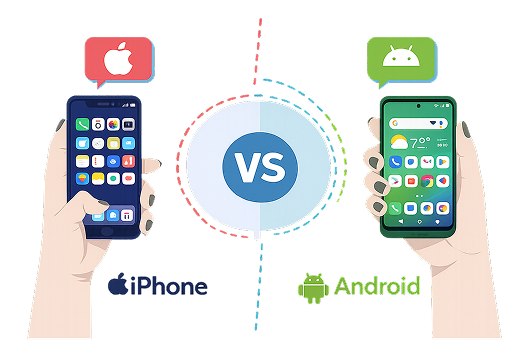
The two major platforms continue to diverge in philosophy more than features.
**iOS** emphasizes consistency, long-term software support (often 6–7 years of major updates), tight hardware-software integration, and a curated App Store. Privacy controls and system-wide features remain strong points.
**Android** offers more customization, variety of form factors (including foldables), and faster access to new features from different manufacturers. Software update longevity has improved, though it still varies by brand. The open nature allows greater flexibility for power users.
Both platforms now deliver smooth performance, excellent multitasking, and robust security foundations. The choice often comes down to ecosystem preference (especially if you already own other devices from Apple, Google, Samsung, or another brand) and how much customization you want.
### Apps: Quality Over Quantity
The best mobile experience comes from a focused set of well-chosen apps rather than dozens of rarely used ones. In 2026 the strongest categories remain:
- **Communication** — Messaging and video-call apps that work reliably across platforms.
- **Productivity** — Note-taking, document editing, email, and calendar tools that sync cleanly.
- **Photography and media** — Camera apps, photo editors, and streaming services optimized for mobile screens and data use.
- **Navigation and travel** — Maps with offline support and real-time transit information.
- **Health and fitness** — Apps that work well with phone sensors and wearable devices.
- **Banking and payments** — Secure, fast mobile banking and digital wallet support.
App stores continue to emphasize privacy labels, battery impact information, and clearer permission controls. Users who regularly review permissions and uninstall unused apps generally enjoy better battery life, storage, and privacy.
### Practical Advice for Everyday Use
1. Prioritize battery health and charging habits — avoid constant 100% charges and extreme heat when possible.
2. Keep only the apps you actually use. Archive or delete the rest.
3. Review app permissions periodically, especially for location, microphone, and camera access.
4. Use built-in digital wellbeing tools to set limits on distracting apps.
5. Back up important data (photos, documents, contacts) regularly through cloud or local methods.
6. Consider total cost of ownership: software support length, repair costs, and resale value matter as much as the initial price.
### Foldables, Mid-Range, and Special Form Factors
Foldable phones have improved in durability and software optimization but remain a premium niche. Most people still prefer traditional slabs for reliability and one-handed use. Compact phones and larger “phablet” sizes both have dedicated audiences. The mid-range segment continues to offer the best value for the majority of users.
### Looking Ahead
The smartphone market in 2026 is less about revolutionary leaps and more about refinement: better cameras, longer software support, improved durability, and smoother software. The devices that feel best day-to-day are those that disappear into your routine — reliable battery, clear display, fast performance, and a clean set of useful apps.
Choosing a phone or organizing your apps is less about chasing the newest feature and more about matching the device to how you actually live and work. A well-chosen mid-range phone with a focused app selection often delivers a better experience than an overloaded flagship.

Leave a comment
Your email address will not be published. Required fields are marked *