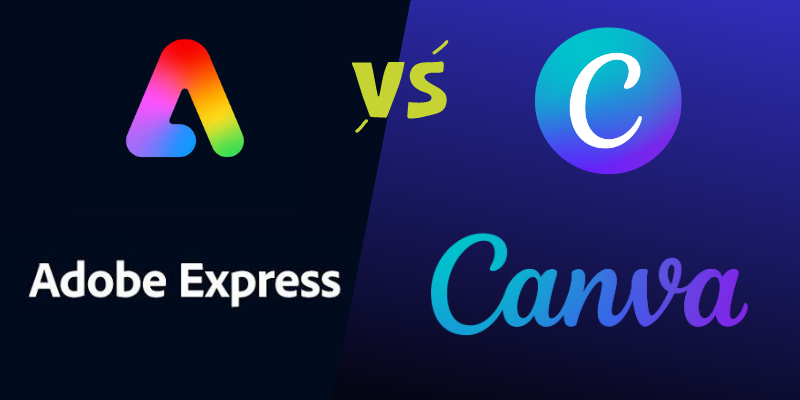
Canva vs Adobe Express: Which Is Better for Beginners?
Creating a professional-looking graphic used to require expensive software and a fair amount of design knowledge.
Today, beginners can create social media posts, presentations, flyers, posters, thumbnails, and other graphics using web-based design platforms.
Two names that frequently come up are Canva and Adobe Express.
Both are designed to make graphic design easier, but they approach the experience somewhat differently.
So which one should a beginner choose?
The answer depends on what you want to create and how much control you need.
What Is Canva?
Canva is an online design platform built around simplicity.
One of its biggest attractions is the large collection of templates. Instead of starting with a blank page, you can choose a design that is close to what you want and customize it.
Canva can be used for things such as:
- Social media graphics
- Flyers
- Posters
- Presentations
- Logos
- Resumes
- Invitations
- YouTube thumbnails
- Simple videos
For someone who has never used professional design software, the interface is relatively easy to understand.
What Is Adobe Express?
Adobe Express is Adobe's more beginner-friendly creative platform.
It provides tools for creating graphics, social media content, videos, presentations, and other visual materials.
Because it belongs to Adobe's broader creative ecosystem, it can be particularly attractive to people who already use Adobe products.
Like Canva, Adobe Express also provides templates and tools intended to help beginners create designs without having to master complex professional software first.
Canva vs Adobe Express: The Main Difference
The simplest way to think about the difference is this:
Canva focuses heavily on making design accessible and straightforward.
Adobe Express combines beginner-friendly design with Adobe's broader creative ecosystem.
Neither description means that one platform is automatically better.
The right choice depends on your needs.
1. Ease of Use
For a complete beginner, simplicity matters.
Canva has built much of its reputation around making design approachable. You can select a template, replace the text and images, adjust colors, and export the result without needing extensive design knowledge.
Adobe Express also aims to be easy to use, but people who are completely new to Adobe products may need some time to become familiar with its interface.
Winner for simplicity: Canva
But the difference may not matter much once you become comfortable with either platform.
2. Templates
Templates can save a huge amount of time.
Instead of asking:
«“How should I design this?”»
you can start with an existing layout and customize it.
Both Canva and Adobe Express provide templates for common design tasks.
Canva has a particularly broad reputation for template-driven design, which is one reason beginners often find it convenient.
Winner for beginners: Canva
3. Design Tools
Both platforms provide tools for manipulating text, images, shapes, layouts, and other design elements.
Adobe has a long history in professional creative software, and Adobe Express benefits from that broader ecosystem.
However, you don't necessarily need advanced tools when you're creating a simple business flyer or Instagram post.
For beginners, having fewer complicated controls can sometimes actually be an advantage.
Result: Depends on the user.
4. AI Features
AI has become an increasingly important part of modern design software.
Both companies have incorporated AI-powered features into their products, although the exact tools available can change as the platforms are updated.
These features can help with things such as generating or editing visual content, creating ideas, removing elements, or speeding up parts of the design process.
If AI is an important factor in your decision, don't choose based on an old comparison article.
Check the current features and availability on the official platforms before subscribing.
Result: Tie, depending on the features you need.
5. Brand Design
If you're creating content for a business, maintaining a consistent visual identity is important.
You don't want your Instagram post to use completely different fonts and colors from your website, presentation, and advertisements.
Both platforms provide ways to maintain consistency across designs, although the exact features available can depend on the plan you're using.
For a business creating content regularly, this can be more important than having the largest collection of templates.
6. Video and Social Media Content
Modern design isn't limited to static images.
Creators and businesses increasingly need short videos, animated graphics, social media posts, and other visual formats.
Both Canva and Adobe Express provide tools for this type of content.
If you're primarily creating simple social media content, either platform can be a reasonable starting point.
7. Learning Curve
Neither platform requires you to spend months learning complicated software.
That's one of the reasons they are popular.
However, there's an important distinction between learning how to use the software and learning how to design well.
You can learn where the buttons are in a few hours.
Learning good typography, spacing, composition, hierarchy, and visual communication takes considerably longer.
The software can help you create a design.
It can't automatically give you good taste.
8. Which One Is Better for Business?
For a small business owner who needs to produce flyers, social media posts, presentations, and simple marketing materials quickly, Canva can be a very practical choice.
For someone already working within Adobe's ecosystem or who expects to move into more advanced Adobe creative tools later, Adobe Express may be a more natural choice.
There isn't a universal answer.
A Simple Comparison
Feature| Canva| Adobe Express
Beginner-friendly| Excellent| Excellent
Templates| Extensive| Extensive
Social media graphics| Excellent| Excellent
Presentations| Strong| Strong
Basic video| Yes| Yes
AI-powered features| Yes| Yes
Adobe ecosystem| No| Yes
Advanced professional workflow| More limited| Stronger connection to Adobe ecosystem
Features and plans can change, so treat this table as a general comparison rather than a permanent specification sheet.
Which One Should You Choose?
Choose Canva if:
- You're completely new to graphic design.
- You want a very simple workflow.
- You rely heavily on templates.
- You create lots of social media graphics.
- You want to get a design finished quickly.
Consider Adobe Express if:
- You already use Adobe products.
- You want access to Adobe's wider creative ecosystem.
- You want a beginner-friendly entry point into Adobe's tools.
- You regularly work with Adobe-related workflows.
You Don't Have to Choose Forever
There's no rule saying you can only use one design platform.
Try both.
Create the same simple project—a social media post, for example—using each platform.
Then ask yourself:
Which interface feels more natural?
Which gives me the tools I actually need?
Which makes it easier to produce the type of content I create?
Those answers are more useful than simply following someone's ranking online.
Final Thoughts
Canva and Adobe Express have made graphic design considerably more accessible to beginners.
If your goal is to create attractive social media graphics, flyers, presentations, or other everyday visual content, either platform can get you started without requiring years of design experience.
For absolute beginners, Canva is probably the easier starting point, particularly if you want a template-driven workflow.
But Adobe Express is worth considering, especially if you're already interested in Adobe's creative ecosystem.
Ultimately, the best design tool is the one you can use comfortably to create work that communicates your message clearly.
Don't spend too much time choosing the tool. Learn the fundamentals, start designing, and improve with practice.
This article is part of Alvonbot.com's Digital Skills series.

Leave a comment
Your email address will not be published. Required fields are marked *