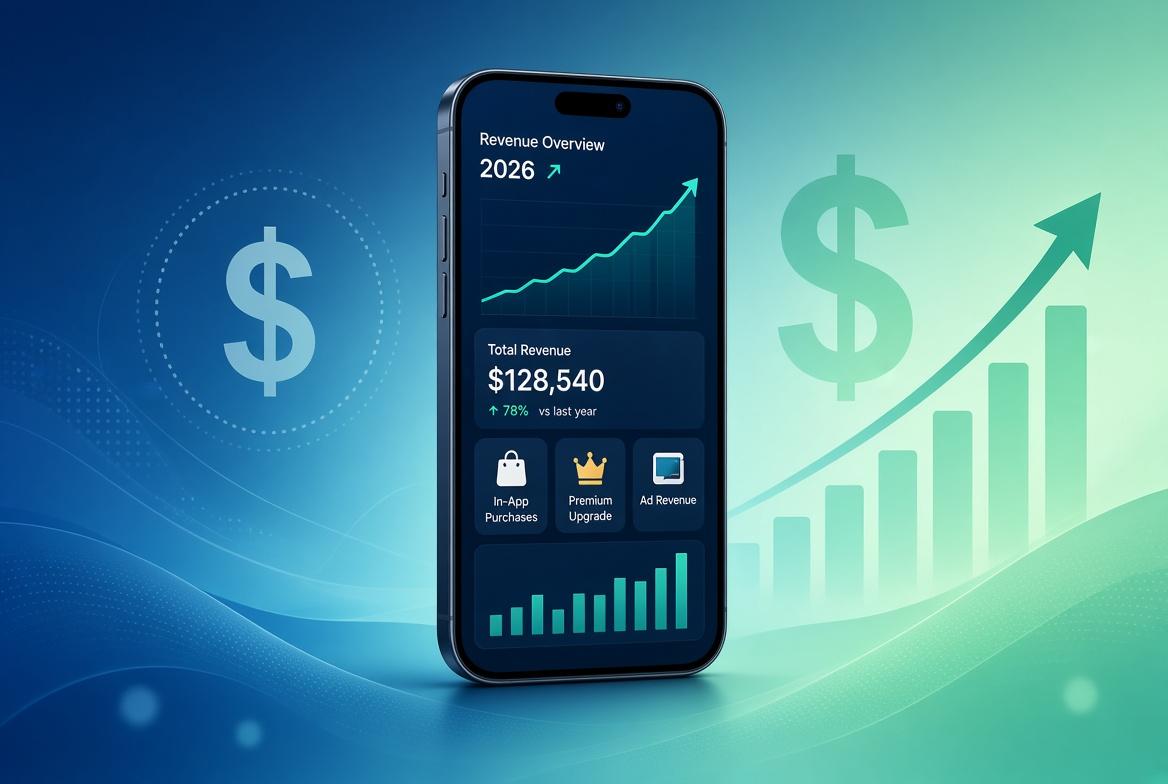
Building and publishing an app is only half the journey. The real question most people eventually ask is: How do I actually make money from it?
In 2026, there are several proven ways to monetize a mobile app. Some methods work better for certain types of apps than others. Many beginners make the mistake of choosing the wrong monetization model or trying to add payments too early.
This guide explains the main ways to earn money from a mobile app, the pros and cons of each, and practical advice on what works best for new developers and indie creators.
### 1. Advertising (The Most Common Starting Point)
Showing ads is still one of the easiest ways for beginners to start earning.
**Popular ad networks in 2026:**
- Google AdMob (still the dominant choice)
- Meta Audience Network
- Unity Ads (especially for games)
- Other niche networks
**Common ad formats:**
- Banner ads (small ads at the top or bottom)
- Interstitial ads (full-screen ads between actions)
- Rewarded ads (users watch an ad to get a reward)
- Native ads (blend into the app content)
**Pros:**
- Easy to implement
- Works even with free apps
- No need for users to pay
**Cons:**
- Earnings are usually low unless you have high traffic
- Too many ads can annoy users and increase uninstalls
- Revenue depends heavily on user location (users in the US, UK, Canada, etc. pay much more)
**Realistic expectation:**
With a few thousand daily active users, you might earn a modest amount. Significant income usually requires tens of thousands of active users or more.
### 2. Freemium Model (Free App + Paid Upgrades)
This is one of the most popular and effective models.
Users download the app for free. Some features are locked and can only be unlocked by paying.
Examples:
- Free version with basic features
- Paid version or “Pro” unlock for advanced tools
- Extra content, themes, or premium filters
**Pros:**
- Low barrier to entry (users can try before paying)
- Can generate solid revenue if the paid features are valuable
- Works well for productivity, photo, utility, and education apps
**Cons:**
- You must carefully balance free vs paid features
- If the free version is too limited, people uninstall
- If it’s too generous, few people upgrade
**Tip:** Make the free version genuinely useful, then offer clear upgrades that save time or unlock power features.
### 3. In-App Purchases & Virtual Goods
Common in games and some lifestyle apps.
Users buy:
- Virtual currency
- Extra lives or boosts
- Cosmetic items
- Additional content
**Pros:**
- Can be very profitable (especially in games)
- Users who love the app are often willing to spend
**Cons:**
- Harder to implement well outside of games
- Requires careful design so it doesn’t feel pay-to-win
- Apple and Google take a commission (usually around 15–30% depending on the situation)
### 4. Subscriptions (Recurring Revenue)
Subscriptions have become one of the strongest monetization methods in 2026.
Users pay monthly or yearly for ongoing access.
Best suited for:
- Productivity apps
- Fitness and health apps
- Education and learning apps
- Content or media apps
- Tools that provide continuous value
**Pros:**
- Predictable, recurring income
- Higher lifetime value per user
- Works extremely well when your app delivers ongoing benefits
**Cons:**
- Harder to convince users to subscribe
- You must keep delivering value so people don’t cancel
- Higher expectations from paying users
**Success tip:** Offer a free trial (3–7 days is common) so people can experience the full value before paying.
### 5. Paid Apps (One-Time Purchase)
Users pay once to download the app.
This model used to be more popular. In 2026 it still works for some categories (specialized tools, professional apps, or high-quality niche products), but it’s harder for most beginners.
**Pros:**
- Simple to understand
- No need to manage ongoing subscriptions or ads
**Cons:**
- Much harder to get downloads
- Users are more hesitant to pay before trying
- Lower total revenue potential compared to subscriptions in many cases
### 6. Other Monetization Methods
- **Affiliate marketing** — Recommend products or services and earn commissions
- **Sponsored content** or partnerships
- **Selling user data** — Heavily restricted and often not recommended (privacy rules are strict)
- **Physical goods or services** tied to the app
- **Enterprise / B2B licensing** — Selling the app to companies
These can work well but usually require an existing audience or strong niche positioning.
### Which Monetization Model Should You Choose?
Here’s practical advice based on app type:
| App Type | Recommended Model | Why |
|---------------------------|--------------------------------|-----|
| Simple utility / tool | Freemium or one-time purchase | Users want results fast |
| Productivity / productivity tools | Subscription or Freemium | Ongoing value |
| Content or media | Subscription + Ads | Recurring + scale |
| Games | In-app purchases + Ads + Rewarded | High engagement |
| Beginner / low-traffic app| Ads first | Easiest to start |
**Best strategy for most beginners:**
1. Launch with ads or a simple freemium model
2. Focus on getting real users and feedback
3. Add subscriptions or stronger paid features once you see what people value
### Important Reality Check
Most apps make little or no money. A small percentage make significant income.
The apps that succeed usually have:
- A clear problem they solve
- Good user experience
- Consistent updates
- Some form of marketing or organic growth
- A monetization model that matches user behavior
Monetization works best when it feels fair to the user. Aggressive or poorly placed ads and locked features often backfire.
### Key Platforms and Fees to Know
- **Google Play** and **Apple App Store** both take a commission on most digital purchases (typically 15% or 30% depending on the program and amount)
- Tax and payout rules vary by country
- You need a valid payment profile and, in many cases, tax information
Always read the latest policies on both stores.
### Final Advice for 2026
Start simple. Don’t try to build a complex subscription system with five pricing tiers on day one.
Focus first on creating an app that people actually find useful. Once you have real users, it becomes much clearer which monetization method fits best.
Many successful app makers began with ads or basic freemium, learned from their users, and improved their revenue model over time.
Making money from an app is possible — but it almost always comes after solving a real problem for people and delivering a good experience.

Leave a comment
Your email address will not be published. Required fields are marked *